Choosing the best Pull Out Faucets in China requires more than comparing polished photos and low prices. A kitchen faucet works daily, often under wet, greasy, and demanding conditions. Richard Trethewey, a plumbing and heating expert known for This Old House, says, “The kitchen sink is the hardest working fixture in the house.” That observation matters when evaluating Chinese manufacturers.
A dependable model should offer a smooth pull-out hose, stable retraction, and a ceramic cartridge tested for repeated use. Check the hose length, swivel range, spray-button design, and water-flow performance. Stainless steel or certified lead-free materials can improve confidence, but material names alone prove little. Request test reports, factory quality records, warranty terms, and clear installation instructions. Supplier communication matters too. Delayed answers may signal future service problems.
No faucet wins everywhere. Some models provide excellent spray control but feel stiff during retraction. Others look impressive but develop loose handles after heavy use. That is easy to forget. Our comparison considers real kitchen details, including cabinet clearance, counter thickness, water pressure, and replacement-part access. We also examine whether suppliers maintain consistent production between sample approval and bulk delivery.
China offers extensive choices, from budget options for apartment projects to refined Pull Out Faucets for hospitality and premium residential kitchens. However, the cheapest quotation is rarely the complete cost. Shipping, fitting compatibility, inspection, maintenance, and after-sales support can change the final value. This guide aims to identify practical strengths, expose common weaknesses, and help buyers choose with evidence rather than attractive promises.
What Is a Pull-Out Faucet and How Does It Work?
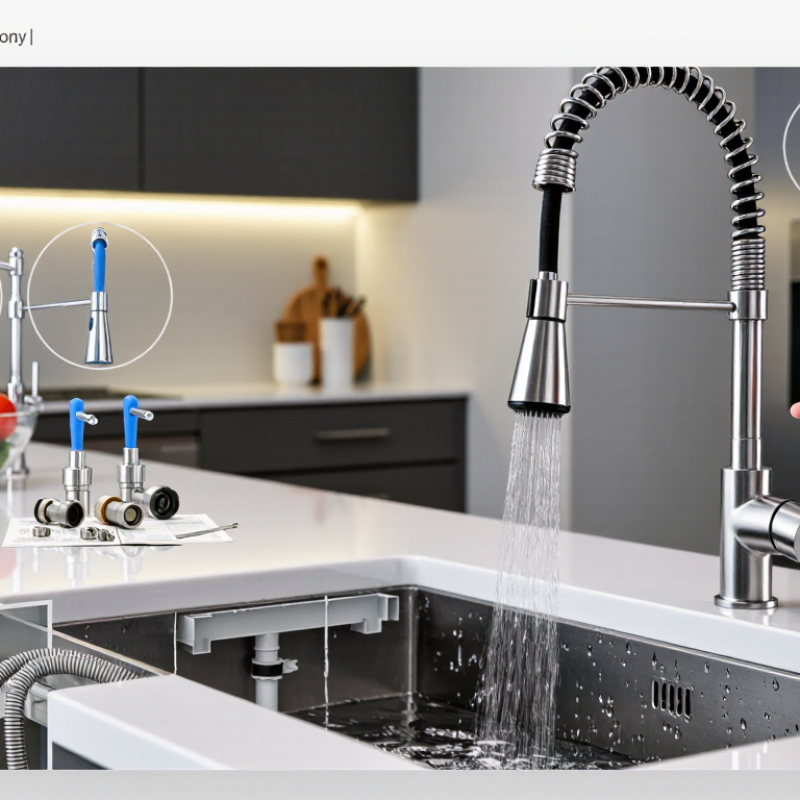
A pull-out faucet has a spray head that pulls straight out from the spout on a flexible hose. The hose usually runs through the faucet body and into the cabinet below the sink. A counterweight helps retract it when you guide the head back. Some models use a magnetic or mechanical dock to hold the nozzle in place. It is a simple idea. The useful part is reach.
At the spray head, a button or lever typically switches between a steady stream and a spray pattern. This makes it easier to rinse a large pot, wash leafy vegetables, or clean the sink corners without moving the pot around. Pull-out designs often suit compact sinks because the head extends toward the user rather than high above the basin.
Check the hose length, spray controls, and clearance beneath the sink before choosing one. In everyday use, keep the hose path clear of stored bottles and cleaning supplies; a snag can make retraction awkward.
Installation details vary, and a heavy nozzle may not dock neatly if the hose or counterweight is poorly positioned. That part is easy to overlook. A pull-out faucet can be convenient, but it is not automatically the best fit for every sink.
How to Evaluate Pull-Out Faucets for Chinese Kitchens
What Are the Best Pull Out Faucets in China?
How to Evaluate Pull-Out Faucets for Chinese Kitchens
A good pull-out faucet should suit the sink, plumbing, and daily cooking habits—not just look sleek. Houzz’s 2024 U.S. Kitchen Trends Study reports that 87% of renovating homeowners replaced kitchen faucets. This is a renovation benchmark, not evidence of Chinese buying patterns. Still, it shows why faucet performance deserves attention. Measure the sink depth and tap-hole position before choosing. A short hose may barely reach a wok, while a heavy spray head can snap back harshly. Fit matters.
Check the hose’s reach, retraction, and resistance to twisting. Test both spray modes over a full sink; weak pressure can make rinsing vegetables frustrating. Ask for flow-rate and cartridge details, plus clear warranty and replacement-part information. For Chinese kitchens, confirm compatibility with local hot- and cold-water connections, countertop thickness, and the sink’s mounting holes. Review product documentation against applicable Chinese standards and water-efficiency requirements. Test it wet. A showroom pull can feel smooth but reveal little about months of use. I would also inspect the hose where it bends beneath the sink; this small detail is easy to overlook, and I cannot judge long-term durability from a brief demonstration alone.
Which Features Matter Most When Comparing Models?
When comparing pull out faucets in China, focus on how they work at your sink, not just their appearance. Check the hose length and whether the spray head reaches every corner of your basin. A smooth, weighted retraction feels controlled; a hose that catches can become annoying quickly. Test both spray and stream settings, and look for a button you can operate with wet hands. Small details matter.
Tips: Ask about the faucet’s material, cartridge type, and replacement parts before buying. Stainless steel or brass components may offer good durability, but construction and maintenance matter too. If possible, pull the hose out several times and check that it returns without jerking. Test it yourself.
Also measure the mounting hole, countertop thickness, and clearance beneath the sink. These details can prevent an otherwise attractive model from fitting properly. Check the stated water-pressure range and whether the connections match your plumbing setup. Clear installation instructions and accessible service support are useful signs of a carefully specified product. I would not judge quality by finish alone; even a polished faucet can have a stiff handle or a short hose. Choose the model that suits your daily tasks and can be maintained locally.
Which Brands and Faucet Types Are Available in China?
China’s pull-out faucet market offers more variety than a simple brand ranking suggests. Domestic manufacturers, sanitaryware groups, online private labels, and export-focused factories all supply this category. Their products range from stainless-steel single-handle models to brass-bodied faucets with ceramic cartridges. Some factories share similar molds, but internal valves and hose quality can differ sharply.
Industry reports support this broad supply picture. Grand View Research identifies Asia-Pacific as a major plumbing fixtures market, supported by residential construction and renovation demand. Mordor Intelligence also reports continuing growth in China’s kitchen and bathroom fixture sector. These reports do not prove that one supplier is best. They show why buyers should compare materials, testing records, warranty terms, and after-sales capacity.
Pull-out faucets remain practical for compact Chinese kitchens. Their flexible hose can rinse a sink corner or fill a tall pot. Pull-down models provide a longer spray arc and often suit deeper sinks. Sensor faucets reduce touch points, while filtered-water designs add a separate drinking outlet. Thermostatic types are less common in ordinary kitchens but appear in premium projects. A useful check is simple: extend the hose repeatedly, inspect its return action, and listen for cartridge noise. Online reviews help, yet they can be incomplete. I would not trust appearance alone; a polished surface may hide a weak connector or awkward spray switch.
What Are the Best Pull Out Faucets in China? - Which Brands and Faucet Types Are Available in China?
The best choice depends on sink layout, installation requirements, spray functions, and maintenance needs. This comparison focuses on commonly available faucet types and selection criteria; it does not rank or list brands.
| Faucet type |
Typical operation and features |
Best suited for |
Checks before purchase |
| Single-handle pull-out mixer |
A flexible hose lets the spray head pull out from the spout. One lever typically controls water flow and temperature. |
Everyday kitchen use, rinsing produce, and cleaning different areas of the sink. |
Confirm the hose reaches the whole sink and can retract without catching on plumbing or stored items below. |
| Pull-out mixer with spray-and-stream modes |
A button or switch on the spray head changes between a more concentrated stream and a wider spray. The exact modes vary by model. |
Households that want a choice of rinse patterns for filling containers and washing dishes. |
Check how the mode switch works and whether the spray head returns to the preferred setting after the water is turned off. |
| Multi-mode pull-out mixer |
May offer two or more spray patterns, such as stream, spray, or a pause function. Available functions differ among products. |
Users who regularly switch between filling, rinsing, and cleaning tasks. |
Inspect the control layout and ask whether replacement spray heads or compatible parts are available. |
| High-arc pull-out mixer |
Uses a taller spout with a pull-out spray head; the high arc provides additional clearance above the sink. |
Deep sinks or kitchens where space is needed to wash larger pots. |
Measure the distance between the spout and cabinets, shelves, or windows above the sink. |
| Compact pull-out mixer |
A shorter or lower-profile design with a pull-out spray head; overall reach and hose travel depend on the model. |
Small kitchens, shallow sinks, or installations with limited overhead clearance. |
Check that the spout reach is sufficient for the sink and that the handle has room to move. |
| Deck-mounted pull-out mixer |
Installed through a hole in the sink or countertop. Hole count and mounting hardware vary by product. |
Most standard sink or countertop installations that have a suitable faucet opening. |
Match the faucet’s mounting requirements to the existing hole size, countertop thickness, and under-sink space. |
| Filtered-water combination faucet |
Some designs combine a regular mixer with a separate filtered-water outlet. The filtration system and water paths depend on the product. |
Kitchens where a separate filtered-water outlet is desired alongside the main tap. |
Confirm whether a filter is included, how it is installed, and the filter replacement schedule and cost. |
Practical comparison checklist
| Dimension |
What to compare |
| Installation compatibility |
Mounting method, number and size of faucet holes, countertop thickness, connection type, and available space beneath the sink. Do not assume fittings are identical across models. |
| Body and finish |
Product specifications may list materials such as brass or stainless steel and finishes such as chrome or brushed coatings. Verify the stated material and care instructions for the exact model. |
| Cartridge and controls |
Check the control type, cartridge details, smoothness of handle movement, warranty terms, and availability of service parts. |
| Water flow and pressure |
Flow depends on the faucet design and the water pressure at the installation site. Compare the manufacturer’s stated flow information under its specified test conditions. |
| Hose and spray head |
Assess hose reach, retraction mechanism, spray-head weight, spray controls, and clearance around the sink. |
| Maintenance and support |
Review cleaning guidance, warranty coverage, installation instructions, and the availability of replacement hoses, aerators, cartridges, or spray heads. |
How to Choose a Pull-Out Faucet for Your Kitchen?
Choosing a pull-out faucet for a kitchen starts with the sink, not the finish. Measure basin depth, counter thickness, mounting-hole size, and the distance from the spout to the drain. A long hose may sound useful, but excess length can sag below the cabinet. Check that the spray head docks firmly and returns without twisting. It should feel balanced.
Look for a solid metal body, a ceramic cartridge, and a flexible hose with a smooth outer surface. These details usually support longer service, but construction claims need evidence. Read the technical sheet, installation guide, and independent test information when available. Match the faucet’s flow rate to household water pressure. Low pressure can weaken spray performance. Two spray settings are often enough: a steady stream for filling pots and a wider spray for rinsing vegetables. Keep it simple.
Before buying, place a bucket under the sink and confirm the connections can be reached by hand. This small check prevents awkward maintenance later. Consider the handle position if children or busy cooks may bump it. Wipe the nozzle regularly, especially where mineral deposits collect. In hard-water areas, removable silicone nozzles are practical. I would not choose by appearance alone. Some attractive pull-out faucets have short hoses, stiff docks, or vague warranty terms. That is easy to miss. Ask for replacement-part availability and clear cleaning instructions. A careful choice should fit the daily routine, not merely the showroom.
How to Choose a Pull-Out Faucet for Your Kitchen
The chart shows practical pull-out hose-length targets for common kitchen layouts. A 60–80 cm hose is generally suitable for compact or standard sinks, while deeper or wider sinks benefit from 100–120 cm of usable hose. When choosing a faucet, also check the mounting-hole size, water-pressure range, swivel angle, spray-mode switching, and the availability of replacement cartridges and hoses.
Conclusion
Pull Out Faucets are practical kitchen fixtures designed with a detachable spray head that extends from the spout, making it easier to rinse vegetables, wash dishes, and clean the sink. By switching between a steady stream and a focused spray, they offer greater flexibility than traditional fixed faucets while keeping the countertop organized. Their retractable hose and return mechanism also help improve daily convenience and appearance.
When evaluating Pull Out Faucets for Chinese kitchens, consider installation compatibility, sink size, water pressure, hose length, spray-head control, rotation range, and the quality of the cartridge and surface finish. Reliable models should operate smoothly, resist leaks and corrosion, and be easy to clean and maintain. Homeowners should also compare pull-out and pull-down designs, select a suitable mounting style, and choose features that match their cooking habits, kitchen layout, budget, and long-term use.