
Choosing a China top Brass Bibcock manufacturer supplier requires more than comparing prices. A reliable supplier should combine material knowledge, stable production, accurate machining, and responsive service. The bibcock may look simple, yet every thread, washer, and outlet affects daily performance.
David Lin, a veteran brass valve engineer, explains, “A dependable bibcock begins with controlled brass, not attractive packaging.” His point deserves attention. Quality brass should support strength, corrosion resistance, and safe water contact. Buyers should request material details, pressure-test records, dimensional samples, and production photographs. They should also confirm thread standards before placing an order.
Small details matter.
A professional manufacturer can explain alloy selection, forging or casting methods, polishing quality, cartridge design, and surface treatment. It should also identify weaknesses honestly. For example, a polished finish may hide uneven machining. A low-cost washer may shorten service life. I have seen supplier comparisons focus heavily on unit price, while ignoring leakage testing and replacement support. That approach can create expensive problems later.
This guide introduces practical methods for evaluating a Brass Bibcock manufacturer supplier in China. It considers factory capability, quality control, customization, packaging, export experience, and communication. It also encourages buyers to inspect samples under realistic conditions. Turn the handle repeatedly. Check the threads. Watch for seepage around the stem.
No supplier is perfect.
However, a trustworthy partner documents its process, welcomes technical questions, and improves when problems appear. These qualities help distributors, contractors, and importers build safer, more consistent product lines.
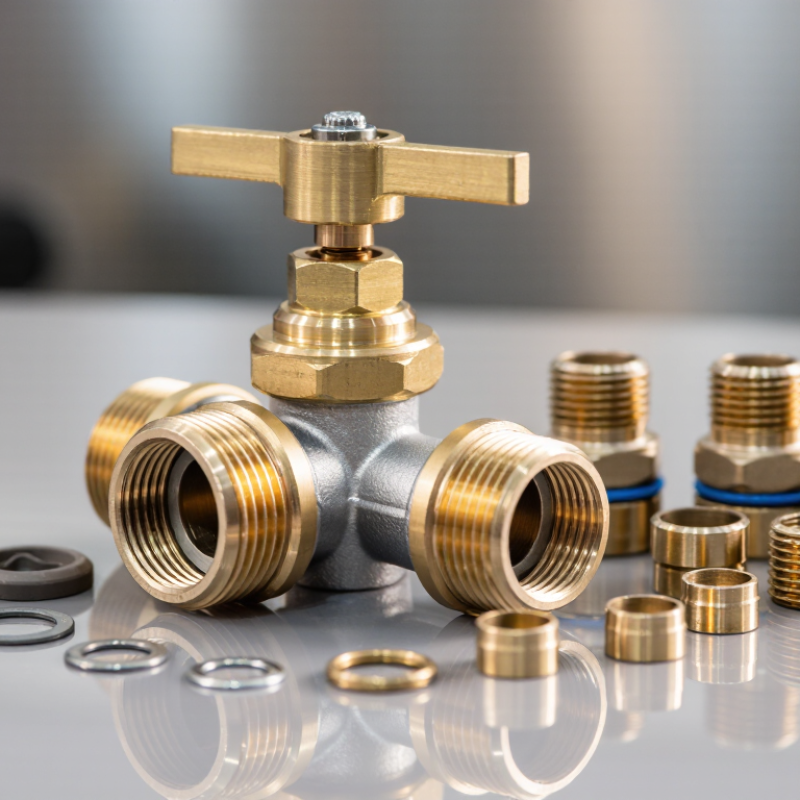
A brass bibcock is a hand-operated tap with a threaded inlet and outlet. It controls water from a wall, tank, or outdoor pipe. Most models use a forged brass body, stem, washer, bonnet, and hose connection. Brass offers useful corrosion resistance and strong thread retention. However, alloy quality matters more than appearance. Poor machining can cause leakage around the stem.
A practical design needs smooth handle movement and a precise sealing surface. Manufacturers should check thread accuracy, body pressure resistance, and repeated opening cycles. According to Grand View Research, the global plumbing fixtures market may grow at roughly 5% annually through 2030. This trend supports demand for reliable water-control fittings. The 2023 WHO and UNICEF JMP report also found that 2.2 billion people lacked safely managed drinking water in 2022. Bibcocks cannot solve that gap, but they remain useful at distribution points, utility rooms, gardens, workshops, and construction sites.
Installation details are easy to underestimate. A damaged thread, excessive tape, or uneven tightening may create slow leaks. That wastes water quietly. Outdoor bibcocks often include hose nozzles, protective caps, or lockable handles. Lead-free material choices may also be required by the destination market. No design is perfect. A compact handle may be convenient, yet difficult to operate with wet gloves. Careful testing and honest product evaluation remain essential for dependable brass bibcock supply.
China Top Brass Bibcock Manufacturer Supplier?
A reliable brass bibcock manufacturer shows its quality through daily production details. Experienced engineers check brass composition before machining begins. This helps prevent weak bodies, porous castings, and early leakage. The supplier should also control thread accuracy, handle alignment, and surface finishing. Small errors matter. During factory visits, ask to see pressure-testing equipment, not only polished samples.
Material traceability is another important quality. Each production batch should connect to inspection records and supplier certificates. A professional manufacturer explains its testing process clearly. Typical checks include pressure resistance, sealing performance, thread compatibility, and repeated handle operation. Independent laboratory testing can provide stronger evidence when required by the target market. Clear documentation supports safer purchasing decisions.
Reliable communication matters as much as machinery. The manufacturer should confirm drawings, packaging details, tolerances, and delivery schedules in writing. It should respond honestly when a requested design needs improvement. No supplier is flawless. Even experienced teams may overlook a packaging weakness or misread a fitting requirement. What matters is whether they accept feedback, correct the issue, and record the lesson. A capable supplier can also provide samples before mass production and explain how quality remains stable across large orders.
| Evaluation Dimension | Reliable Quality Benchmark | Typical Verification Data or Document | Why It Matters |
|---|---|---|---|
| Body Material | Manufactured from a suitable copper alloy for potable-water or general plumbing use, with the alloy grade clearly declared. | Material certificate, alloy designation, chemical composition report, and incoming-material inspection records. | Correct alloy selection affects corrosion resistance, mechanical strength, machinability, and service life. |
| Lead Content Compliance | For drinking-water applications, the product should meet the applicable local lead restrictions. In the United States, lead-free plumbing products are generally assessed against a maximum weighted average lead content of 0.25% on wetted surfaces. | Third-party test report or certification to applicable requirements such as NSF/ANSI/CAN 61 and NSF/ANSI/CAN 372, where required by the market. | Reduces the risk of non-compliance and helps protect drinking-water quality. |
| Applicable Product Standard | The manufacturer should identify the standard used for design, testing, and acceptance rather than offering an undefined “standard” product. | Declaration of conformity, technical specification, inspection plan, and test reports referencing the applicable regional standard. | Standards provide consistent requirements for dimensions, pressure performance, materials, and safety. |
| Pressure Rating | A clearly stated working-pressure rating must be provided for each model, connection size, and temperature range. The rating should not be assumed to be universal. | Pressure-test record showing the test pressure, duration, medium, temperature, and acceptance criteria. | Proper pressure data helps prevent leakage or component failure during installation and operation. |
| Hydrostatic and Leakage Testing | Every production batch should be checked for body integrity, seat sealing, and external leakage under controlled test conditions. | Batch test report, sampling plan, calibrated pressure gauge record, and pass/fail results. | Testing identifies casting defects, poor assembly, damaged seals, and valve-seat problems before shipment. |
| Valve Operating Mechanism | The handle, stem, screw thread, and valve seat should operate smoothly without excessive friction, binding, or abnormal looseness. | Operating-torque test, cycle test, visual inspection, and functional test at the end of production. | Smooth operation improves user experience and reduces premature wear or accidental damage. |
| Sealing Components | Washers, O-rings, and other elastomeric parts should be selected for the intended water temperature, pressure, and fluid-contact application. | Elastomer material specification, temperature range, dimensional inspection, and compatibility documentation. | Seal quality strongly influences service life and resistance to dripping, swelling, cracking, or hardening. |
| Surface Finish | The surface should be free from visible cracks, major porosity, sharp edges, blistering, peeling, and significant plating or coating defects. | Appearance inspection standard, surface-finish samples, coating-thickness test where applicable, and defect classification record. | A consistent finish improves corrosion protection, appearance, cleanability, and customer acceptance. |
| Dimensional Accuracy | Connection threads, outlet dimensions, wall thickness, handle position, and installation dimensions should conform to the approved drawing or applicable thread standard. | Caliper, thread-gauge, and profile-gauge inspection records linked to the product drawing. | Accurate dimensions support compatibility with pipes, hoses, washers, and installation tools. |
| Thread Quality | Inlet and outlet threads should be correctly identified, properly formed, and matched to the intended regional thread system. | Thread gauge results, thread-type declaration, sample fit testing, and dimensional inspection report. | Correct threads reduce cross-threading, installation damage, and connection leakage. |
| Corrosion Resistance | The selected brass alloy and surface treatment should be appropriate for the water chemistry and environmental conditions in the target market. | Material composition report, dezincification-resistance data where relevant, and coating or salt-spray results when a coating is used. | Corrosion resistance helps maintain structural integrity and appearance over time. |
| Manufacturing Process Control | Casting, forging, machining, polishing, assembly, and testing should be controlled through documented work instructions and inspection checkpoints. | Process flow chart, quality-control plan, work instructions, first-article records, and corrective-action reports. | Process control improves consistency between production lots and reduces avoidable defects. |
| Traceability | Products should be traceable to a production batch, raw-material lot, inspection record, and shipment documentation. | Batch code, packing-list reference, inspection report, and retained sample or production record. | Traceability supports fast investigation, targeted recalls, and reliable after-sales service. |
| Quality Management System | A documented quality-management system should control purchasing, production, inspection, nonconforming products, and corrective actions. | Valid quality-management certificate where applicable, internal-audit records, complaint analysis, and corrective-action documentation. | A systematic approach is more dependable than relying only on final visual inspection. |
| Customization Capability | The supplier should be able to manage approved changes to size, thread type, handle style, finish, packaging, and labeling without losing technical control. | Approved drawings, engineering-change records, prototype approval, and pre-production sample report. | Controlled customization helps meet different plumbing systems and market requirements. |
| Packaging and Export Protection | Each bibcock should be protected against scratches, impact, moisture, and contamination during storage and international transport. | Packaging specification, drop-test or transport-test record where required, carton markings, and packing inspection report. | Suitable packaging reduces damage, corrosion, missing parts, and identification errors during delivery. |
| Technical Documentation | The supplier should provide accurate product drawings, dimensions, material information, installation instructions, and maintenance guidance. | Technical datasheet, 2D drawing, installation guide, spare-parts list, and test documentation. | Clear documentation helps distributors, installers, inspectors, and end users use the product correctly. |
| Warranty and After-Sales Support | Warranty terms should define coverage, exclusions, claim evidence, response time, replacement arrangements, and spare-part availability. | Written warranty policy, complaint-handling procedure, service records, and replacement-part catalogue. | Responsive support lowers the total cost of ownership and strengthens long-term supply reliability. |
Reliable brass bibcocks begin with traceable raw material, not attractive packaging. Manufacturers commonly use copper alloys meeting EN 12165 requirements. Each batch should receive chemical analysis before production. This step matters because the World Health Organization reported that 2.2 billion people lacked safely managed drinking water in 2022.
Production usually starts with hot forging or precision casting. The body is then machined, threaded, polished, and assembled with seals. Operators inspect thread depth, handle movement, and outlet alignment. A small machining error can cause leakage later. It happens.
Pressure testing follows assembly. Each bibcock should undergo shell and seat tests under documented pressure and time conditions. Inspectors also check flow direction, surface cracks, and repeated opening cycles. For drinking-water applications, NSF/ANSI/CAN 61 evaluates materials that contact potable water. In the United States, lead-free plumbing products must meet a 0.25% weighted-average lead limit under the Safe Drinking Water Act.
A strong supplier keeps inspection records, calibration certificates, and sample-retention data. Batch identification should remain visible after packaging. Visual inspection alone is insufficient. A polished valve may still contain an internal flaw. That is where some factories need improvement: testing must be consistent, even during urgent shipments. Independent laboratory verification adds credibility, but internal process discipline remains essential.
Choosing the Right Brass Bibcock Supplier for Your Market
A brass bibcock supplier should be judged by performance, not catalog width. The U.S. EPA WaterSense program reports that household leaks can waste more than 10,000 gallons of water yearly. A poorly machined spindle or weak seal can increase that loss. Ask suppliers for pressure-test records, cycle-test results, and material traceability for each production batch.
For potable-water applications, check compliance with recognized requirements such as NSF/ANSI/CAN 61 and relevant local standards. EN 13828 also provides useful benchmarks for manually operated copper-alloy valves. A reliable factory should explain brass composition, lead-control measures, thread tolerances, and plating thickness in clear documents. Request samples from different batches. One perfect sample proves very little.
Market fit matters as much as technical quality. A supplier serving cold climates should verify freeze resistance and packaging protection. For outdoor markets, corrosion testing and UV-resistant handles deserve attention. The International Organization for Standardization reports that ISO 9001 focuses on controlled, repeatable quality processes, but certification alone does not guarantee a flawless bibcock. That point is easy to overlook. Visit the workshop when possible, inspect machining areas, and compare inspection records with shipped goods. Delivery consistency, spare seals, minimum order quantities, and honest defect reporting may matter more than the lowest quotation. Suppliers sometimes promise too much. Buyers should test, question, and document everything.
Common nominal connection sizes help suppliers match brass bibcock production, tooling, packaging, and inventory with market requirements. The chart uses standard metric nominal size equivalents for widely used G-thread connections.
Reference basis: ISO 228-1 pipe thread designations and commonly used nominal size equivalents. Actual product specifications should also be verified for material grade, working pressure, surface finish, certification, and destination-market compliance.
Quality starts with the brass composition, machining control, and pressure testing. Ask for material reports, not verbal promises. Reliable factories should identify copper and zinc content through documented inspection records. Lead-free requirements also vary by destination market. Confirm the applicable standard before approving production.
A useful factory audit examines thread gauges, casting surfaces, valve seats, and handle alignment. Each bibcock should pass leakage and pressure tests before packing. Request test pressure, holding time, and sampling rules in writing. Customization may include outlet size, thread type, handle shape, plating, packaging, and laser marking. Send a dimensioned drawing. Small thread errors can cause installation failures.
Purchasing decisions need more than the lowest quotation. Compare tooling charges, minimum order quantity, sample fees, production time, and replacement policies. Ask how batches are traced from raw material to final inspection. A polished sample can hide inconsistent internal machining. Independent inspection reduces this risk. However, inspection is not a perfect shield. Clear specifications still matter. One often-missed detail is carton protection around the threaded inlet. Damaged threads create expensive delays. A supplier that answers technical questions with measurements seems more dependable than one offering vague assurances. certifiability should be verified for the target market.
Reliable manufacturers control material composition, machining, threading, assembly, and testing. Small details matter. They also provide clear inspection records and honest communication.
Each production batch should have chemical analysis and supplier certificates. Material records should connect to batch numbers. Verbal promises are not enough.
The valve should pass shell pressure, seat sealing, and repeated handle tests. Inspectors should also check thread accuracy, cracks, and outlet alignment. Visual inspection alone is insufficient.
Request drawings, tolerances, thread details, test pressure, holding time, and sampling rules. Ask for samples first. Written details prevent expensive misunderstandings.
Common options include outlet size, thread type, handle shape, surface finish, packaging, and marking. Provide a dimensioned drawing. A small thread error can stop installation.
Check pressure-testing equipment, thread gauges, casting surfaces, valve seats, and calibration records. Do not inspect only polished samples. Internal defects may stay hidden.
A dependable supplier keeps batch identification, inspection results, calibration certificates, and retained samples. Records should remain traceable after packaging. This supports later problem solving.
Compare tooling costs, minimum quantities, sample fees, delivery time, and replacement policies. The lowest price may hide weak inspection or poor carton protection. That needs reflection.
Threaded inlets need firm carton protection during transport. Damaged threads can delay installation and increase replacement costs. Packaging seems minor. It is not.
A Brass Bibcock is a practical valve commonly used to control water flow in gardens, utility areas, plumbing systems, and light industrial applications. Its simple structure, durable brass body, corrosion resistance, and easy operation make it suitable for both indoor and outdoor use. A reliable manufacturer should provide consistent material quality, precise machining, secure connections, smooth handles, and dependable sealing performance. They should also maintain clear production procedures, skilled technical teams, and effective quality control throughout manufacturing.
During production, brass bibcocks should be carefully cast or machined, assembled, pressure-tested, and inspected for leakage, strength, thread accuracy, and surface finish. When choosing a supplier, buyers should consider product specifications, certifications, customization options, minimum order quantities, delivery capacity, packaging, and after-sales support. A trustworthy supplier can offer different sizes, connection types, handle styles, and surface treatments to meet regional market needs while maintaining stable quality and competitive purchasing value.
