
Adhesive Teflon Tape looks simple on a roll. Choosing the right one is not. Its performance depends on more than the PTFE film: adhesive chemistry, thickness, surface condition, temperature, and pressure all matter. A tape that releases cleanly from a heated platen may not bond reliably around a cable or uneven seam. Small details count.
The Grand View Research report on the global adhesive tapes market estimated its 2023 value at USD 75.4 billion and projected 5.8% annual growth from 2024 to 2030. That broad market figure is not specific to PTFE tape. Still, it reflects how widely tape selection affects manufacturing and maintenance. For a sound choice, compare product data sheets with the real operating conditions, then test a sample on the actual surface. A laboratory result helps. It does not guarantee the same result on a dusty, curved part.
Materials-selection expert Michael F. Ashby’s approach can be paraphrased as: “Choose materials against the job’s actual constraints, not one impressive property.” That is a useful starting point for these seven tips. Check temperature limits, adhesive type, thickness, liner handling, and removal needs before ordering. Also ask how the tape behaves after repeated heating or contact with oils. Easy to overlook. No single specification tells the whole story, and even careful selection can miss an awkward detail on the production floor. That is why practical testing belongs beside technical claims.
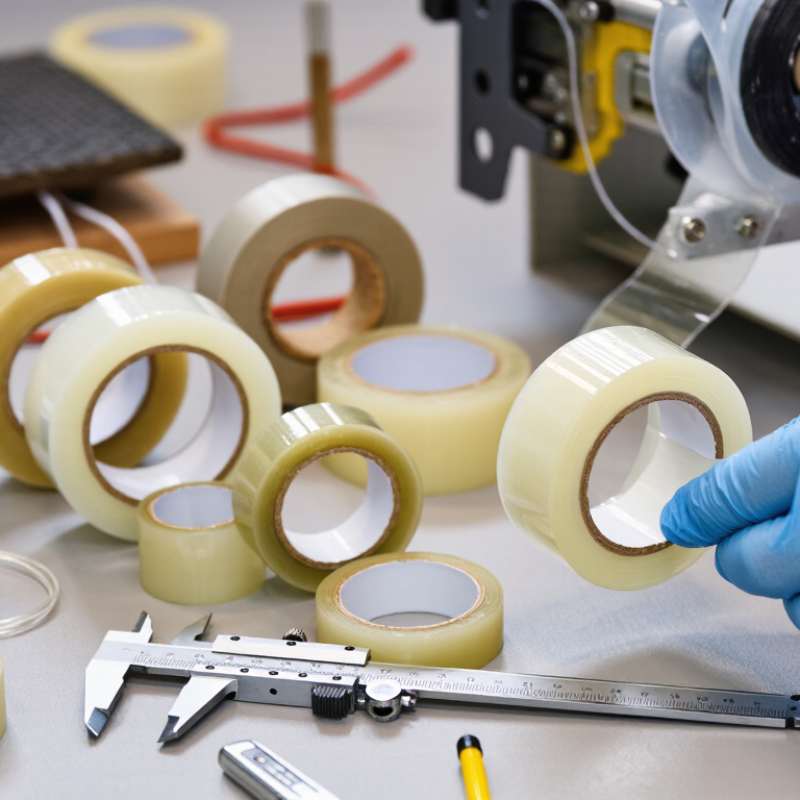
Choosing Adhesive PTFE Tape: What It Is and How It Works
Adhesive PTFE tape combines a thin polytetrafluoroethylene film with a pressure-sensitive adhesive on one side. A removable liner protects the adhesive until application. The PTFE surface is smooth and has low friction, so parts can slide across it with less drag. The adhesive holds the tape to a surface; it does not make every joint leakproof or every material stick reliably.
Short version: the two layers do different jobs.
When pressed onto a clean, dry surface, the adhesive makes contact with small surface irregularities and gradually bonds. Dust, oil, and fingerprints can weaken that bond. PTFE can also handle heat and many chemicals, but the tape’s safe limits depend on its adhesive and product specifications.
Check the stated temperature range and intended use before choosing it. A film that tolerates heat does not guarantee its adhesive will.
Tips: Match tape width to the area, and choose thickness based on wear and flexibility needs. Clean the surface, let it dry, then press the tape down firmly without stretching it. Test a small section if the surface is painted, textured, or unusually slick. It is easy to focus only on PTFE’s low-friction face and overlook the adhesive; that is often where a selection goes wrong.
Identify the surface before choosing adhesive Teflon tape. Stainless steel, powder-coated metal, and low-energy plastics can produce very different bonds. Note whether the tape will touch a moving web, seal a heated platen, or protect a sliding part. Each job creates different peel, shear, and abrasion forces. A clean, flat test coupon helps reveal problems early.
Record the actual operating conditions, not just the equipment’s advertised maximum. Include surface temperature, contact pressure, exposure time, cleaning chemicals, and thermal cycles. Heat can soften the adhesive even when the PTFE film remains intact. ASTM D3330/D3330M-04(2022) uses a 300 mm/min peel-test speed for pressure-sensitive tapes. That matters. Compare candidate tapes using the same surface preparation and test method; otherwise, the numbers may mislead.
Also check installation details. A narrow strip on a sharp edge may lift sooner than a wide strip on a flat plate. Measure the edge radius, overlap, and expected load, then test a sample under real conditions. One easy mistake is testing only at room temperature. I would still question any result from a single test: actual equipment cycles can be less forgiving. Keep a simple log of temperature, dwell time, and observed lifting.
Choosing adhesive Teflon tape starts with the job, not the label. Thin PTFE film tape suits smooth sealing surfaces and low-friction guides. Glass-cloth backing is tougher against abrasion and repeated handling, but feels stiffer around tight corners. Silicone adhesive typically tolerates higher temperatures than acrylic; acrylic may offer stronger initial tack on clean, room-temperature surfaces. Check the supplier’s temperature and peel-strength data for the exact construction. In ASTM D3330/D3330M, peel adhesion is measured under controlled test conditions, so values from different methods may not compare directly.
Tip: Compare the whole construction. A thick backing can bridge a rough edge, while a thin film conforms better to a flat roller. Clean the surface, press down firmly, and test a small section under actual heat and load. Small details matter.
Grand View Research’s 2023 adhesive-tape market report estimated the global market at USD 76.5 billion that year. That broad figure signals wide use, not proof that any tape fits a specific machine. Ask for test conditions, not just a maximum-temperature claim. I have seen buyers focus on heat ratings and overlook edge lifting; that is an easy mistake, and worth checking before a long production run.
Compare Tape Types, Adhesives, and Backing Materials
How to read the chart: These are representative upper continuous-use temperatures, not guaranteed ratings for every tape. Actual limits depend on the complete tape construction and conditions. Check the manufacturer’s technical data for your application.
Selection tips: 1) Set your operating temperature. 2) Choose a backing—PTFE film for a smooth, flexible surface or PTFE-coated glass fabric for added dimensional stability. 3) Match the adhesive to the temperature and surface. 4) Check chemical exposure. 5) Consider thickness and conformability. 6) Confirm peel strength and release needs. 7) Test the tape under actual operating conditions.
Choosing adhesive Teflon tape starts with the space available. Measure the surface, including corners and overlap, rather than guessing from the roll width. A narrow strip can leave gaps that collect residue or expose edges to wear. A wider strip may wrinkle around a small roller or seam. Keep the overlap modest and even. That detail matters.
Thickness affects both durability and fit. Thicker tape can tolerate more rubbing, but may sit unevenly on tight curves. Thin tape conforms more easily to flat plates and small rollers, yet can wear through sooner under repeated contact. Check the product’s stated thickness and adhesive type; PTFE-coated tapes are not all constructed alike. I still double-check fit on a scrap piece when the surface shape is awkward.
Temperature ratings deserve careful reading. Compare the tape’s continuous-use rating with the actual operating temperature, not just a brief peak. Heat near a sealing bar can vary across its surface, and the adhesive may have a lower limit than the PTFE facing. Leave a safety margin, and confirm the rating in the technical data sheet. Clean, dry metal gives the adhesive a better chance to bond. Dust or oil can undermine it. Even a correctly rated tape may lift if its edges catch moving material.
Choose adhesive PTFE tape for the surface it will actually touch, not just the material name. A smooth steel panel and a textured, oily machine cover behave differently. Plastic needs extra care. ASTM D2578 uses wetting-test liquids from 30 to 60 mN/m for polyethylene and polypropylene films. This gives a useful surface-treatment check, but it is not a universal pass-fail rule for every tape. Low-energy plastics may need a tape adhesive designed for them, or careful surface preparation.
Then match the tape to the job: temperature, pressure, motion, and exposure to oil or cleaning fluids. A tape holding a cable in place faces different demands from one covering a hot sealing bar. ASTM D3330 measures peel adhesion, while ASTM D3654 evaluates shear holding power; ask for results under conditions close to yours. Test a small sample on the real surface. Press it down firmly, then inspect it after the intended dwell time and temperature. A quick bench check can still mislead. Dust, finger oils, and cold application can change the result, and a tidy-looking edge does not prove lasting adhesion.
It combines a smooth PTFE film with pressure-sensitive adhesive on one side. A removable liner protects the adhesive before use. The layers do different jobs.
No. The adhesive holds the tape to a surface, but it does not guarantee a leakproof joint. Not always.
Stainless steel, powder-coated metal, and low-energy plastics can bond differently. Dust, oil, and fingerprints may weaken the adhesive. Clean surfaces matter.
Clean it, let it dry, then press the tape down firmly without stretching it. Test a small area on painted or textured surfaces.
PTFE film can tolerate heat, but the adhesive may soften sooner. Check the product’s stated temperature range and intended use. Test first.
Match the width to the covered area. Choose thickness based on wear and flexibility needs. A narrow strip may lift more easily from a sharp edge.
Check surface temperature, pressure, exposure time, cleaning chemicals, and thermal cycles. Test on a clean sample using consistent conditions. Keep a simple log.
I would not rely on one test alone. Equipment cycles can be less forgiving than a room-temperature test. Watch for lifting.
Choosing the right Adhesive Teflon Tape starts with understanding how it works: a low-friction, heat-resistant backing is paired with an adhesive layer to create a smooth protective surface. The best option depends on the application and its operating conditions, including the level of heat, friction, pressure, and exposure to moisture or chemicals.
Compare available tape types by their backing material and adhesive properties, then select a width, thickness, and temperature rating suited to the task. Also check that the adhesive is compatible with the surface and that the tape can be applied as required. Clean, dry surfaces and careful placement can help the tape bond properly and perform reliably. Considering these factors before making a selection can help avoid poor fit, premature wear, or unnecessary replacement.
