
Choosing the right Pipe Thread Tape is more than picking a roll from a crowded hardware shelf. The tape must match the thread material, fluid, pressure, temperature, and installation method. White PTFE tape may suit many water connections, while yellow gas-rated tape is designed for approved fuel-gas applications. High-density tape can provide more controlled wrapping, but it does not repair damaged threads.
Small details matter. Clean threads first. Wrap in the tightening direction. Keep the tape away from the pipe opening. A loose edge can enter a valve or restrict a narrow passage. That happens more often than many installers expect.
Richard Trethewey, a respected plumbing and heating expert, has often emphasized the importance of matching materials to the application: “The right repair begins with understanding the system.” That principle fits thread sealing perfectly. Tape is not a universal solution. It is one part of a reliable connection.
This guide compares ten Pipe Thread Tape types, including standard PTFE, high-density PTFE, gas-rated tape, oxygen-service tape, and specialty formulas. Each section will examine compatibility, handling, temperature resistance, sealing performance, and common installation mistakes.
Some choices seem obvious. They are not always.
A bright yellow roll may look stronger, but color alone proves nothing. Product labeling, technical data, and approved service conditions deserve careful attention. The best tape is the one that seals safely, remains stable, and suits the exact connection in front of you. Even experienced workers can overlook that final detail.
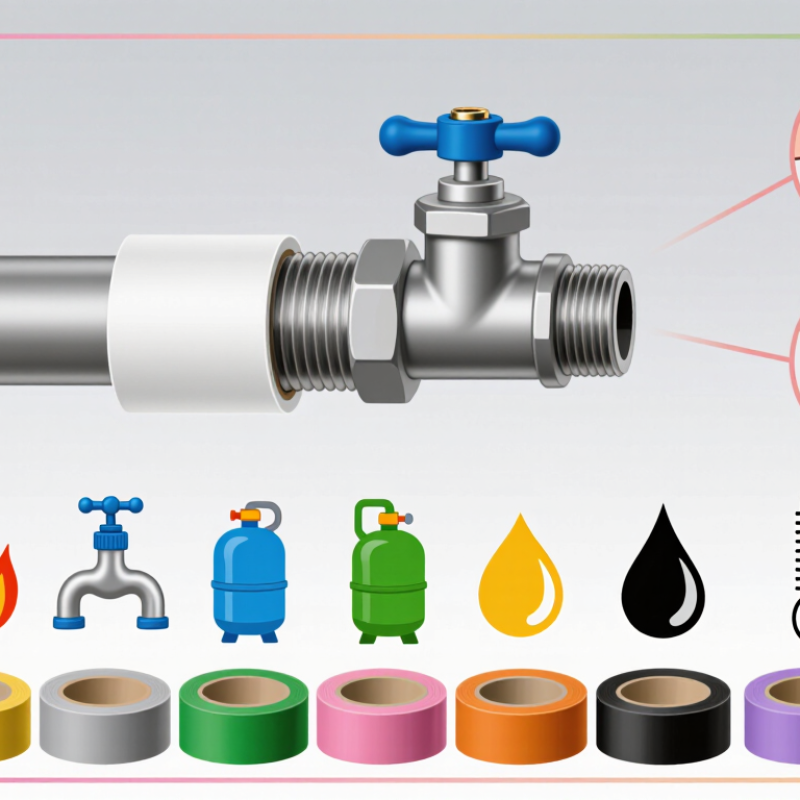
Pipe thread tape is a thin sealing material wrapped around male pipe threads. Most versions use polytetrafluoroethylene (PTFE), valued for chemical resistance and low friction. Some tapes are made for water, gas, oxygen, or industrial chemicals. Their colors may suggest service categories, but color alone is not proof of suitability. Always check the product specification and local code. Good sealing starts with clean, undamaged threads.
When tightened, the tape fills tiny spiral gaps between mating threads. It also helps the threads move smoothly, allowing proper tightening without excessive force. The seal comes from compressed tape and thread contact, not from tape acting like glue. Wrap it in the tightening direction, starting one thread back from the pipe end. Keep the first thread clear. This reduces loose strands entering the system. Press the tape firmly into the thread valleys, then cut it cleanly.
In field work, leaks often follow rushed preparation rather than poor tape. A dirty thread. A crooked wrap. Too much tape can split a fitting or create false tightness. Too little may leave a visible spiral path. I have found that inspecting the finished joint is worthwhile, even when it feels routine. Thread tape should not replace a gasket or compensate for cracked fittings and mismatched threads. For plastic fittings, hand-tightening with limited tool adjustment is usually safer than force. The right tape depends on fluid, temperature, pressure, thread material, and maintenance conditions. That choice deserves more thought than a quick color comparison.
| No. | Pipe Thread Tape Type | Typical Color or Appearance | Common Applications | Typical Temperature Capability | Key Advantages | Important Limitations | Best Choice When |
|---|---|---|---|---|---|---|---|
| 1 | Standard-Density PTFE Tape | Usually white and thin | General plumbing connections, water lines, air lines, and low-pressure threaded fittings | Often approximately −60°C to 260°C, depending on the product and service conditions | Easy to apply, chemically resistant, non-hardening, and suitable for many ordinary pipe threads | Thin tape can tear, bunch, or leave gaps if it is wrapped incorrectly; it is not automatically approved for gas or oxygen service | Choose it for routine water and low-pressure plumbing work with compatible threaded fittings |
| 2 | High-Density PTFE Tape | White, usually thicker and denser than standard tape | Water, compressed air, hydraulic connections, and applications requiring more thread fill | Commonly about −60°C to 260°C, subject to the manufacturer’s specification | Fills thread clearances more effectively, requires fewer wraps, and is less likely to split during installation | More difficult to stretch evenly; excessive wrapping can prevent proper thread engagement | Choose it when a stronger, denser seal is needed on clean, undamaged tapered threads |
| 3 | Yellow Gas-Service PTFE Tape | Yellow or yellow-gold | Fuel gas, natural gas, propane, and other gaseous-fuel threaded connections where local approval permits tape | Often rated from approximately −20°C to 260°C, but ratings vary significantly | Usually thicker than general-purpose tape and commonly manufactured to gas-service requirements | Color alone does not prove certification; gas systems may require approved sealants, testing, and licensed installation | Choose only when the tape is specifically certified for the gas, pressure, and code requirements involved |
| 4 | Pink Plumbing PTFE Tape | Pink or rose-colored | Potable-water lines, household plumbing, faucets, valves, and threaded water fittings | Frequently rated within approximately −60°C to 260°C, depending on the product | Typically denser than basic white tape and easy to identify on plumbing installations | Pink color is not a universal regulatory standard; it may not be suitable for gas, oxygen, or aggressive chemicals | Choose it for water plumbing when the product documentation confirms potable-water compatibility |
| 5 | Oxygen-Service PTFE Tape | Usually clean white tape with dedicated packaging or identification | Oxygen lines and oxygen-enriched systems using fittings approved for oxygen service | Temperature and pressure limits depend on the oxygen-service approval and system design | Made, cleaned, and packaged to reduce hydrocarbon and particulate contamination | Ordinary PTFE tape must not be substituted; contamination can create a serious fire or ignition hazard in oxygen service | Choose it only for systems requiring documented oxygen compatibility and controlled installation procedures |
| 6 | High-Temperature PTFE Tape | White, gray, or another specified color | Hot-water systems, steam-related fittings within the approved range, process piping, and heated equipment | Some products are rated near 260°C; specialized grades may have different limits | Maintains chemical resistance over a broad temperature range and does not cure into a hard plug | Temperature rating alone does not establish suitability for steam pressure, vibration, or thermal cycling | Choose it when the documented temperature, pressure, and chemical ratings match the application |
| 7 | Graphite-Enhanced PTFE Tape | Dark gray or black | Selected high-temperature industrial connections, valves, and applications where improved lubrication is useful | Product-specific; some grades are designed for temperatures higher than ordinary plumbing tape | Can improve thread lubrication and help reduce galling during assembly and disassembly | Graphite may be unsuitable for oxygen service and certain chemicals; it should not be selected by color alone | Choose it for compatible industrial services after checking chemical, temperature, and oxygen restrictions |
| 8 | Wide PTFE Tape | Usually white, supplied in a wider roll | Large-diameter pipe threads, broad male threads, and fittings where additional thread coverage is helpful | Generally similar to the corresponding PTFE grade used in the tape | Covers more of the thread width and can reduce the chance of exposed thread valleys | May wrinkle or overlap at the thread shoulder; excessive width can interfere with assembly | Choose it for larger or wider threaded fittings when the tape width matches the connection |
| 9 | Narrow PTFE Tape | Usually white and supplied in a narrow roll | Small-diameter fittings, instrument connections, compact valves, and restricted access areas | Generally similar to the corresponding PTFE grade used in the tape | Provides better control on small threads and is less likely to cover internal openings | Requires careful wrapping; too many layers can reduce thread engagement on small fittings | Choose it for small fittings where standard-width tape is difficult to control |
| 10 | Specialty Chemical-Resistant PTFE Tape | White or application-specific color | Corrosive chemical lines, laboratory piping, and process systems using media compatible with PTFE | Often within approximately −60°C to 260°C, but chemical service may impose a lower limit | PTFE offers broad resistance to many acids, bases, solvents, and corrosive fluids | PTFE is not universally resistant; molten alkali metals, some fluorinating agents, and certain high-temperature chemicals require special evaluation | Choose it only after verifying compatibility with the exact chemical, concentration, temperature, and pressure |
| How PTFE tape creates a reliable seal: PTFE tape is wrapped around the male tapered thread in the tightening direction. During assembly, the tape fills small clearances between mating thread surfaces, reduces friction, and helps prevent leakage through the spiral thread path. It does not compensate for damaged threads, incorrect thread standards, poor alignment, or insufficient engagement. Always follow the tape specification, applicable plumbing or gas codes, and the fitting manufacturer’s installation instructions. Avoid covering the first thread and do not use tape on connections that seal with a gasket, O-ring, flare, or compression sleeve unless specifically permitted. | |||||||
It fills small gaps between threaded fittings. It does not repair cracks or badly damaged threads.
Material affects heat resistance, chemical compatibility, pressure handling, and flexibility. Standard PTFE tape suits many water and air connections.
Thin tape fits clean, fine threads. Dense tape suits rough, coarse, or tapered threads. More tape is not always better.
It is softer and covers uneven thread surfaces more easily. Apply steady tension, because excessive stretching can create weak areas.
No. Color codes vary between regions and suppliers. Check the technical data, fluid compatibility, pressure range, and temperature limit.
Clean and dry the male threads first. Wrap in the tightening direction, leaving the first thread uncovered. Press the tape into the grooves.
No. It cannot fix cracked fittings, damaged threads, or mismatched connections. Many leaks begin with poor preparation.
Choose tape rated above the normal operating temperature and short-term peaks. Hot water and extreme heat require careful verification.
Not automatically. Match the tape with the fluid, pipe material, pressure, and temperature. A suitable size alone proves little.
Avoid excessive wrapping and force, especially on softer plastic or brass fittings. I sometimes focus on tape and overlook thread damage. That mistake can cause leaks.
Choosing the right Pipe Thread Tape is essential for creating a dependable, leak-resistant connection between threaded pipes and fittings. This guide explains how thread tape works by filling small gaps between threads and improving sealing performance. It explores the main tape types, including differences in material, thickness, density, flexibility, and resistance to heat, pressure, and chemicals. Understanding these features helps users select tape that matches the pipe material, fluid being carried, operating temperature, and working conditions.
The article also compares important factors such as sealing strength, compatibility, ease of application, durability, and removal. A practical selection process is provided to help readers evaluate project requirements before making a choice. By considering thread size, connection type, installation environment, and fluid characteristics, users can choose a suitable Pipe Thread Tape more confidently and achieve safer, cleaner, and more reliable pipe connections.
