
Why Use Pipe Seal Tape for Leak-Free Connections?
A small threaded joint can create a surprisingly expensive problem. One loose connection may stain a cabinet, damage insulation, or waste clean water overnight. The U.S. Environmental Protection Agency reports that household leaks waste nearly one trillion gallons of water annually in the United States. Proper thread sealing helps prevent this avoidable loss.
Pipe Seal Tape works by filling microscopic gaps between compatible male and female threads. It also improves engagement during assembly and supports easier future disassembly. However, it is not magic. Incorrect wrapping, contaminated threads, or excessive tightening can still produce leaks. ASME B1.20.1 and ISO 7-1 emphasize the importance of correctly formed, clean, and compatible pipe threads. These standards support a broader lesson: sealing performance depends on the entire connection, not tape alone.
Richard Trethewey, a plumbing expert and technical consultant featured by This Old House, explains, “A threaded connection is only as reliable as its preparation.” That practical warning deserves attention. Installers should wrap the tape in the thread direction, keep the first thread exposed, and avoid covering the pipe opening. Product selection also matters. PTFE tape designed for water, gas, or chemical service may have different performance requirements. Reports from Grand View Research identify PTFE’s strong use across industrial sealing applications, but market growth does not replace field judgment. A careful installer still checks pressure, temperature, thread material, and local requirements. Sometimes the simplest repair needs the most thought.
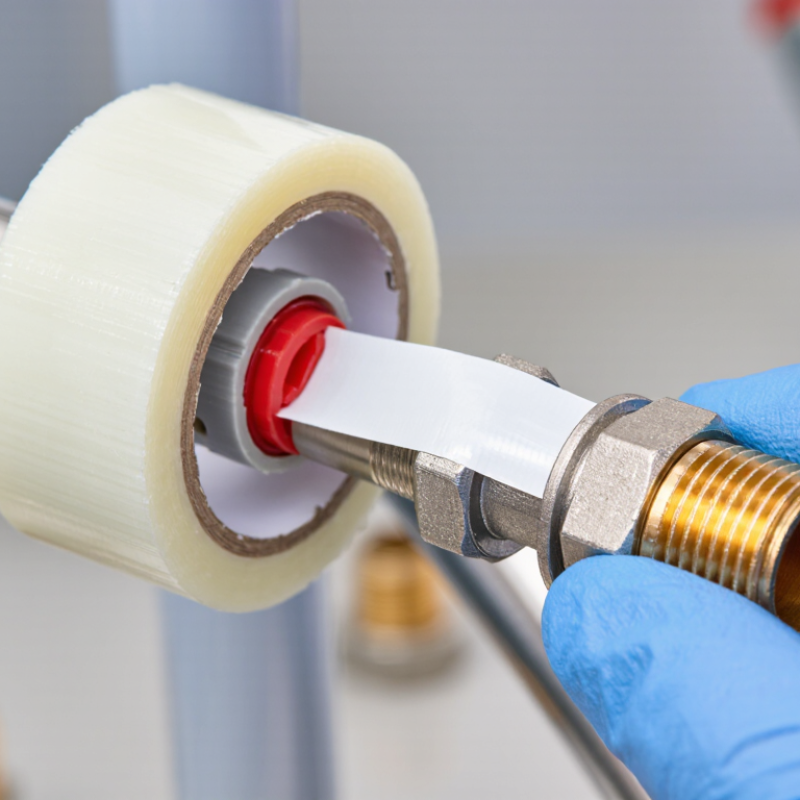
Pipe seal tape is a thin, flexible tape made from polytetrafluoroethylene, commonly called PTFE tape. It contains no adhesive. Instead, it seals threaded pipe connections through controlled compression and material movement. When wrapped around male threads, the tape fills tiny surface gaps that metal threads cannot close alone.
The tape should follow the thread direction, usually clockwise when facing the pipe end. Apply firm, even tension and keep the tape away from the first thread. This helps prevent loose strands from entering the pipe. Three to five neat wraps are often suitable, but thread size, material, and pressure can change that requirement. More tape is not always better.
A clean wrap matters.
During maintenance work, I have seen leaks blamed on poor tape when damaged threads caused the real problem. Inspect both fittings before sealing. PTFE tape can work well with many metal and plastic threads, but it is not suitable for every connection. Compression fittings, flare fittings, and some gas-related assemblies may require different sealing methods. Always follow the fitting manufacturer’s instructions and local safety requirements. After assembly, pressurize the line gradually and check for leakage with an approved method. Never rely only on how tight the joint feels. A connection may look perfect and still need correction.
| Data Dimension | Typical Data or Fact | How It Supports Leak-Free Connections | Practical Application |
|---|---|---|---|
| Product definition | Pipe seal tape is a thin, non-adhesive tape, most commonly made from polytetrafluoroethylene (PTFE). | The tape fills small clearance paths between tapered male and female threads. | Used on threaded pipe and fitting connections where the joint design permits thread sealing. |
| Sealing mechanism | PTFE tape is soft, chemically resistant, and capable of conforming to thread irregularities. | When the fitting is tightened, the tape compresses into the thread profile and reduces leakage channels. | Apply evenly in the direction of tightening so the tape does not unravel during assembly. |
| Common material | PTFE, also known as polytetrafluoroethylene. | PTFE has low friction and broad resistance to many water-based and chemical environments. | Confirm chemical compatibility before use with aggressive chemicals, oxygen service, or unusual fluids. |
| Typical tape thickness | Approximately 0.075–0.1 mm for many general-purpose pipe seal tapes. | A thin, flexible layer can occupy minor gaps without significantly changing thread engagement. | Use the tape thickness recommended for the pipe size, thread condition, and service. |
| Typical tape width | Common widths include approximately 12 mm, 19 mm, and 25 mm. | The correct width helps cover the thread surface without excessive overlap beyond the fitting. | Select a width that covers the thread crest and remains clear of the pipe opening. |
| Thread compatibility | Most suitable for tapered pipe threads, such as NPT or BSPT, when the connection is designed for thread sealing. | Tapered threads tighten against each other and create radial compression around the sealing material. | Do not assume that parallel threads seal with tape alone; they may require a gasket, O-ring, or other seal. |
| Temperature capability | Many PTFE tapes are rated for service from roughly −60°C to 260°C, but the exact rating depends on the product and application. | The material remains useful across a wide temperature range when the tape is correctly specified. | Always follow the temperature limit stated for the specific tape and fluid service. |
| Chemical resistance | PTFE generally resists water, many acids, bases, and solvents. | The tape is less likely to degrade when exposed to many common piping fluids. | Check the fluid, concentration, pressure, temperature, and applicable safety requirements before installation. |
| Installation direction | For standard right-hand threads, wrap the tape clockwise when viewing the end of the male thread. | Wrapping with the tightening direction helps keep the tape seated as the fitting is screwed together. | Keep the first thread free of tape to reduce the chance of loose material entering the pipe. |
| Recommended overlap | Wrap the tape with approximately 50% overlap on each turn; the number of turns depends on tape thickness and thread condition. | Consistent coverage improves continuity over the threaded sealing area. | Avoid excessive layers, which can interfere with proper engagement or place stress on fittings. |
| Pressure performance | Pressure ratings vary substantially by tape specification, thread type, fluid, temperature, and installation quality. | A properly selected tape can improve thread sealing, but it does not increase the pressure rating of the pipe or fitting. | Use only a tape approved for the intended pressure system and test the completed joint for leaks. |
| Connection types not normally sealed by tape | Compression fittings, flare fittings, gasketed joints, and O-ring connections generally seal at a dedicated sealing surface. | Tape on the wrong sealing surface may prevent proper seating or create a false sense of security. | Apply tape only where the fitting manufacturer or applicable standard specifies thread sealing. |
| Main benefits | Low friction, easy application, broad chemical resistance, clean installation, and easy disassembly. | The tape helps close minor thread gaps while making assembly and future maintenance more convenient. | Inspect threads, remove old material, wrap correctly, tighten appropriately, and leak-test before service. |
Note: Temperature, pressure, chemical compatibility, and gas-service suitability must be confirmed from the specific tape specification and the applicable installation standard.
It is usually made from polytetrafluoroethylene, or PTFE. It contains no adhesive. The material fills tiny gaps between threaded surfaces.
Compression pushes the tape into small spaces between matching threads. It also reduces friction during assembly. A neat wrap helps.
Wrap it clockwise when facing the pipe opening. Keep steady tension. Leave the first thread uncovered.
Three to five even wraps often work for suitable connections. Thread size, pressure, and temperature may change this. More is not better.
Clean the threads with a dry cloth. Remove old tape, dirt, and oil. Check for corrosion, flattening, cracks, or damaged threads.
No. It only seals small gaps between compatible threads. A cracked fitting needs replacement. I once blamed tape for a leak caused by damaged threads.
No. Compression and flare fittings often use different sealing methods. Solvent-welded joints need clean surfaces and proper curing, not tape.
Match the tape to the fluid, pressure, temperature, and pipe material. Water may accept general-purpose tape. Oils, solvents, and chemicals require documented compatibility.
Hand-tighten first, then make a small wrench turn. Restore pressure gradually. Check with a dry tissue or approved leak-testing method. Never trust appearance alone.
Pipe Seal Tape is a simple but effective material used to improve the reliability of threaded pipe connections. Wrapped around the male threads, it fills small gaps between mating surfaces and helps create a tighter, leak-resistant joint. The right tape should be selected according to the pipe material, the type of fluid or gas being transported, and the operating temperature and pressure. Using an unsuitable tape can reduce sealing performance or damage the connection.
For best results, clean and dry the threads first, then wrap the tape in the same direction as the thread tightening direction. Keep the tape smooth, overlap each turn slightly, and avoid covering the first thread to prevent loose pieces from entering the pipe. Common mistakes include applying too much or too little tape, wrapping it backward, using it on damaged threads, or tightening the fitting excessively. Careful preparation and correct application help prevent leaks and support a durable connection.
